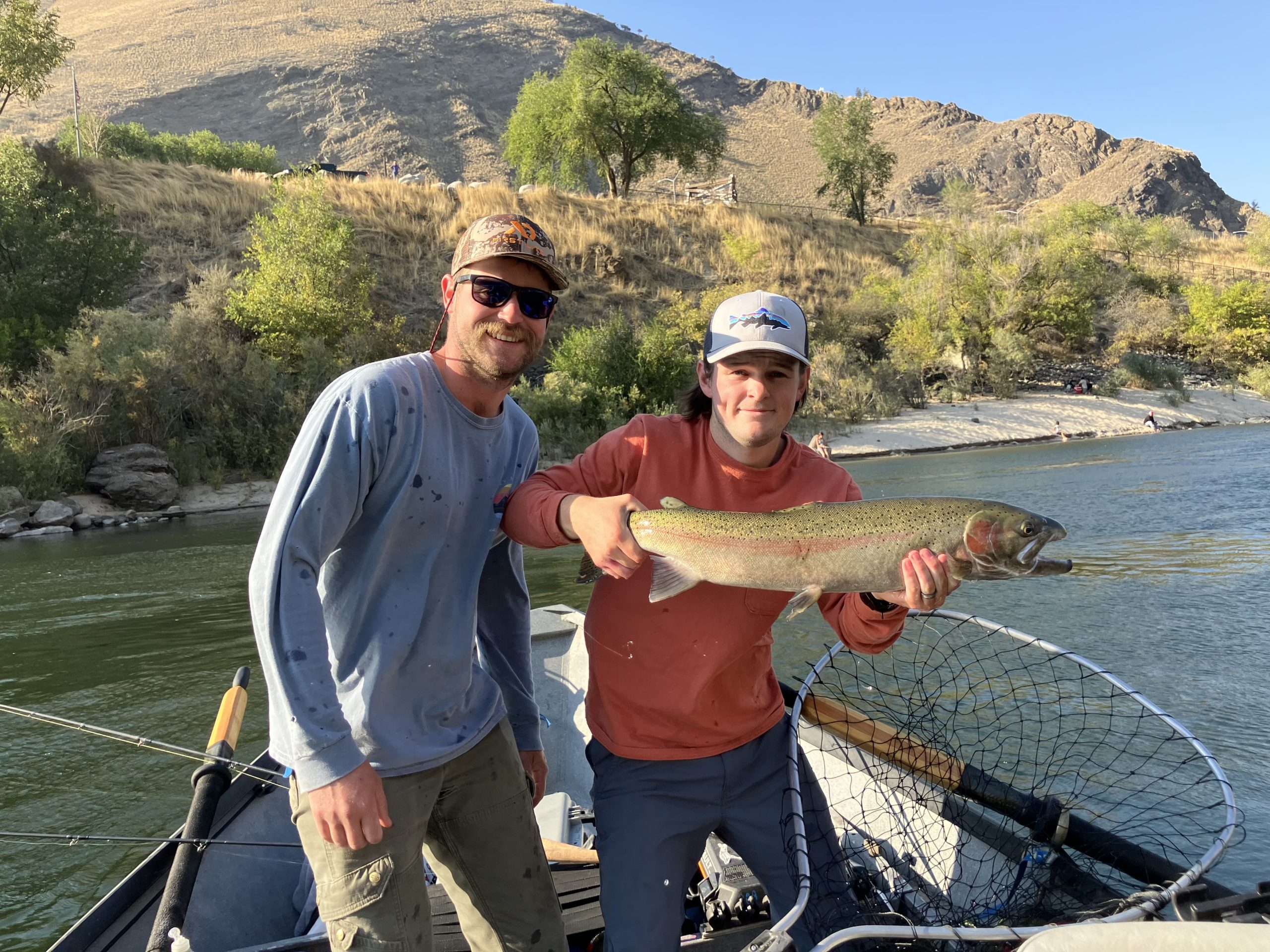
When winter settles into Idaho’s canyon country, many people assume fishing slows down. But on the Salmon River, winter means something exciting for anglers: steelhead season.
Each year, ocean-run steelhead migrate hundreds of miles inland from the Pacific Ocean to reach Idaho’s rivers. Their journey creates one of the most unique cold-weather fisheries in the West. Even when water temperatures hover just above freezing, anglers can still find success targeting winter steelhead on the Salmon River.
For those willing to bundle up and spend a day on the water, it’s hard to beat: quiet river stretches, dramatic canyon scenery, and the chance to hook one of Idaho’s most iconic fish.
Why the Salmon River Is So Good for Steelhead
The Salmon River in Idaho stretches roughly 419 miles and is one of the longest free-flowing rivers in the country. It begins high in the mountains near Stanley before winding through remote wilderness and deep canyon country on its way to the Snake River.
Along the way, hundreds of tributaries create ideal spawning and rearing habitat for steelhead. Much of the Lower Main Salmon River remains remote and lightly pressured, which is part of what makes it such a special place to fish.
In winter especially, it’s common to spend hours on the river with little sign of anyone else around.
Where Winter Steelhead Hold
Many anglers assume winter fish stay only in deep, slow pools. But on the Salmon River, steelhead often hold in surprisingly shallow water.
Guides frequently find fish wintering in riffles about 5–7 feet deep—just enough depth to hide them while still providing good current and oxygen.
To find active fish, anglers typically work a mix of water early in the day:
- Shallow riffles
- Deeper buckets and runs
- Current seams along rocky points
After covering a few good runs, patterns usually start to appear.
Winter Steelhead Fishing Techniques
Cold water changes how steelhead behave. When river temperatures dip into the low 30s, fish often bite more slowly and deliberately.
That’s why many Salmon River fishing guides run several rods with different presentations to see what fish respond to.
Plug Fishing
Diving plugs are one of the most productive lures for Salmon River steelhead fishing. These lures dive into the strike zone and create a steady wobble that draws the attention of nearby fish.
In cold water, bites are often subtle. Instead of a rod slamming down, anglers may see a slow tick or dip in the rod tip as a steelhead investigates the lure. Letting the rod load up before lifting to set the hook usually leads to better hookups.
Shrimp and Bait Divers
When fish want more scent in the water, anglers often add a bait setup using shrimp and a diver rig.
The shrimp adds natural scent and movement, which can be especially effective when steelhead are sluggish in colder temperatures. These bites can take a little longer to develop, so patience helps.
How Water Temperature Affects the Bite
During Idaho winter steelhead fishing, temperature plays a big role.
When the Salmon River sits around 33–34°F, fishing can still be productive—but bites may take time. Even a small temperature change can make a difference.
As the sun warms the river during the day, the water may rise half a degree or more, and that slight increase is often enough to get fish moving and biting.
Wild vs. Hatchery Steelhead
The Salmon River is home to important wild steelhead populations, so conservation rules are part of the fishery.
All steelhead fishing here uses barbless hooks, helping anglers release fish quickly and safely.
Anglers also look for the adipose fin:
- Wild steelhead (fin intact) must be released
- Hatchery steelhead (fin clipped) may be kept
Wild fish continue their journey upstream into Idaho’s mountain tributaries, where they spawn and help sustain future generations of steelhead.
Guided Salmon River Steelhead Trips
Winter steelhead fishing can be incredibly rewarding, but it also comes with a learning curve. Reading the river, understanding where fish hold in cold water, and dialing in the right presentation can make all the difference.
That’s where spending a day on the water with a Salmon River fishing guide can really help. Experienced guides know the productive winter runs, the subtle bite patterns, and the techniques that consistently hook fish in colder conditions.
At Wild River Adventures, winter trips on the Salmon River combine steelhead fishing with one of the most scenic canyon floats in Idaho. It’s a chance to learn the river, enjoy a quiet day outdoors, and hopefully get some fish along the way.
👉 Explore Wild River Adventures fishing trips on the Lower Salmon.
For further information on fishing on the Salmon visit: